






SEO vs Pay Per Click for Small Businesses: What Works Best?
When to Choose SEO: The Long-Term Growth Play
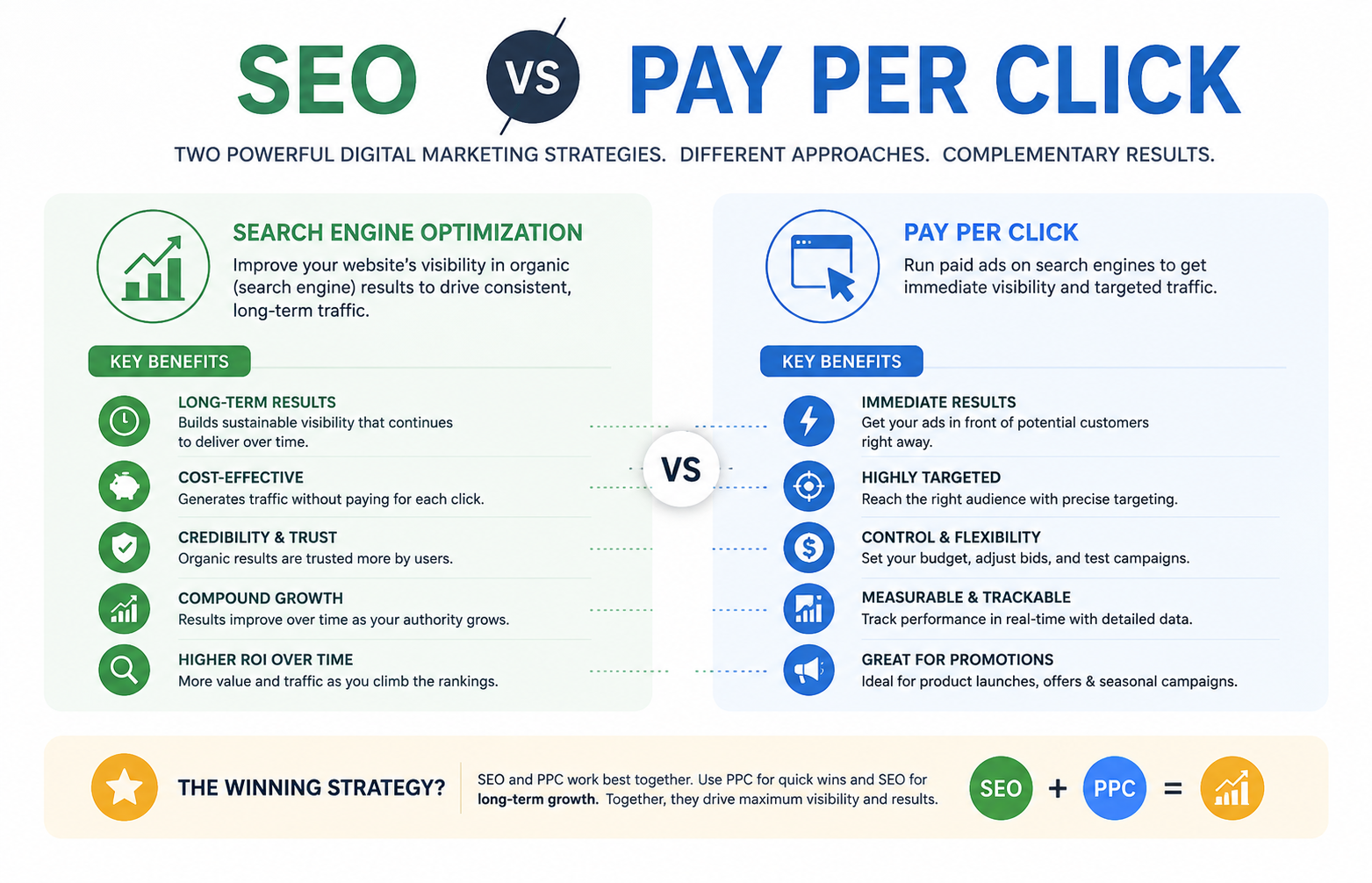
SEO is the foundation of sustainable digital marketing. Unlike paid ads that stop working the moment you pause spending, SEO builds organic visibility that compounds over time .
Why Small Businesses Should Prioritise SEO
-
Cost-effectiveness over time: While SEO requires investment upfront, a well-optimised page can keep bringing traffic and leads for months or years without paying for every click .
-
Brand authority building: Ranking organically for relevant keywords builds trust with your audience and signals to Google that you’re an expert on that topic .
-
Stable, predictable traffic: Once you rank, organic traffic tends to be more consistent than paid traffic, which fluctuates with budget and competition .
-
Local search dominance: 46% of all Google searches have local intent, and the top 3 local pack results capture 44% of all clicks for local-intent queries . A complete Google Business Profile makes you 2.7 times more likely to be considered reputable .
The Downside of SEO
SEO takes time—typically 3 to 6 months to see meaningful results—and requires ongoing optimisation as search algorithms change .
When to Choose PPC: Immediate Visibility and Fast Results
Pay-per-click advertising delivers results within 24 to 48 hours of launching a campaign, making it ideal for time-sensitive needs .
Why PPC Makes Sense for Small Businesses
-
Immediate traffic: PPC gets visitors to your site today, not in six months .
-
Highly targeted audiences: You can target specific demographics, locations, and user behaviours .
-
Keyword testing: Run short campaigns to test keyword intent and validate demand before investing in SEO content .
-
Seasonal or urgent campaigns: Perfect for product launches, seasonal peaks, or filling slow periods .
The Downside of PPC
The moment you stop paying, the traffic stops too . In competitive industries, cost-per-click can be high—the all-industry average in 2026 is $5.42, with legal services reaching $9.87 per click . Customer acquisition costs tend to be higher than SEO .
How SEO and PPC Can Work Together for Small Businesses
A strategic combination outperforms either approach alone. Here is how to make SEO vs Pay Per Click a complementary partnership, not a competition:
1. Use PPC to Test Keywords Before Committing to SEO
Run a short PPC campaign to see how real people respond to certain keywords before spending hours building SEO content around them . If you get solid clicks and a low cost-per-click, that is your green light to invest in full SEO content .
2. Generate Immediate Revenue While SEO Builds
PPC can start generating sales or leads today while your SEO works in the background . Once organic rankings improve, you can reduce PPC spending on those terms and shift the budget to new opportunities .
3. Use PPC to Retarget SEO Visitors
Most people who land on your SEO content do not convert right away. Retargeting ads keep your brand top of mind, nudging them back to your site when they are ready to act .
4. Let PPC Data Shape Your SEO Strategy
Your ad data is full of clues—which headlines get clicks, what keywords convert, and what CTAs work. Use these actual insights to shape your SEO content strategy instead of guessing .
5. Use SEO Content to Improve PPC Quality Scores
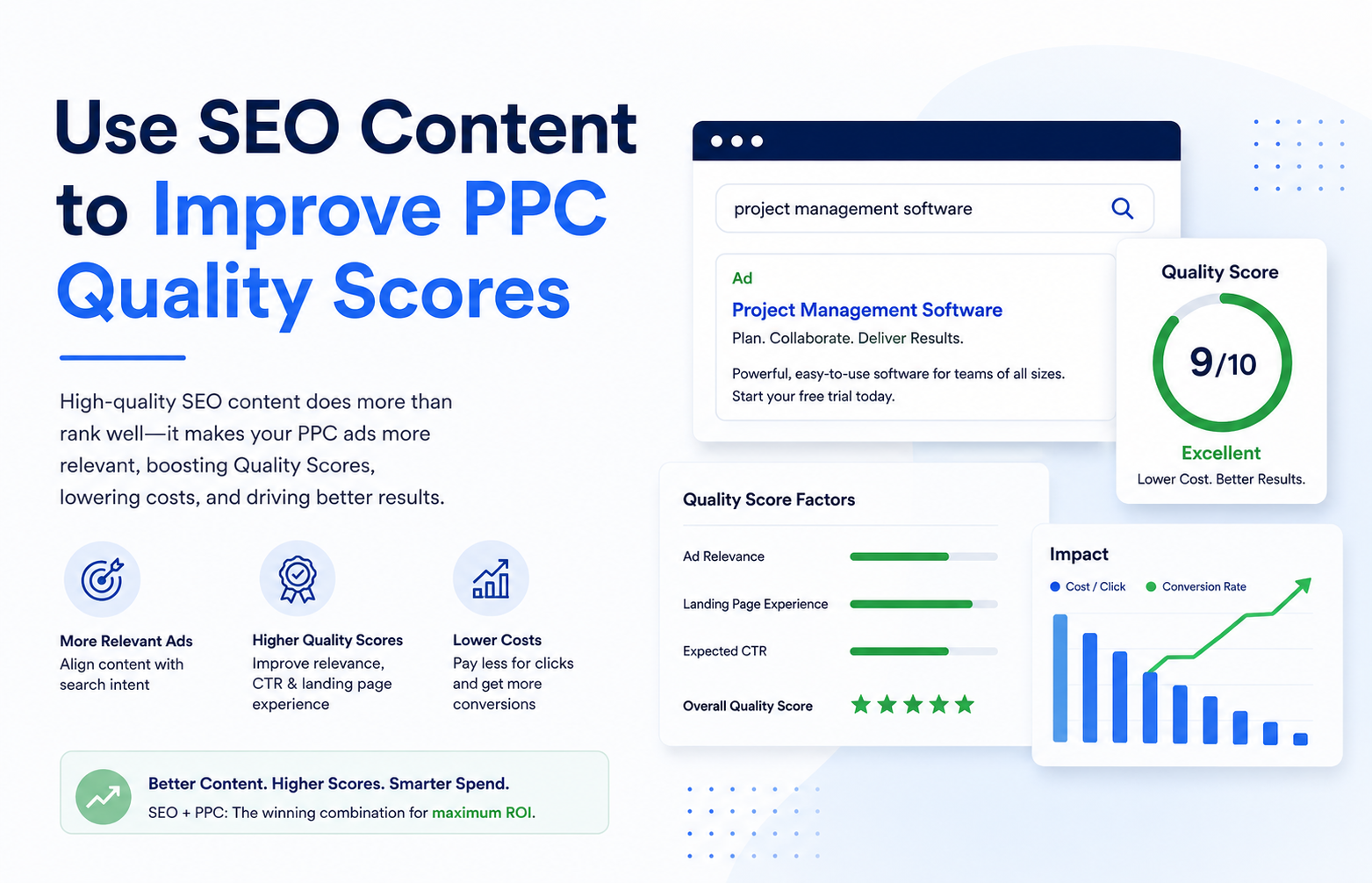
When you send PPC traffic to a high-quality, informative page (rather than a generic landing page), Google recognises the landing page quality and can reduce the cost of bidding for paid ads .
Decision Framework for Small Businesses
| Factor | Choose SEO | Choose PPC |
|---|---|---|
| Timeline | You can wait 3-6 months | You need results immediately |
| Budget | Limited recurring budget | Budget for ongoing spend |
| Goal | Long-term authority and compounding traffic | Immediate sales, product launch, seasonal peak |
| Competition | You can outrank local competitors | Competitive niche where organic will take too long |
Conclusion
For small businesses, SEO is the smarter long-term bet—it is more cost-effective, builds brand authority, and produces results long after the campaign ends. However, the best approach is rarely SEO vs Pay Per Click; it is SEO and PPC together, combining the benefits of organic SEO and PPC campaigns. Use PPC for immediate visibility and keyword testing while investing in SEO for sustainable growth.
Want a marketing strategy that balances SEO and PPC for your business—with a partner who understands small business budgets and timelines?
Get in touch with Orbitix today.