






Medical SEO Agency Tips to Rank Higher in Local Search
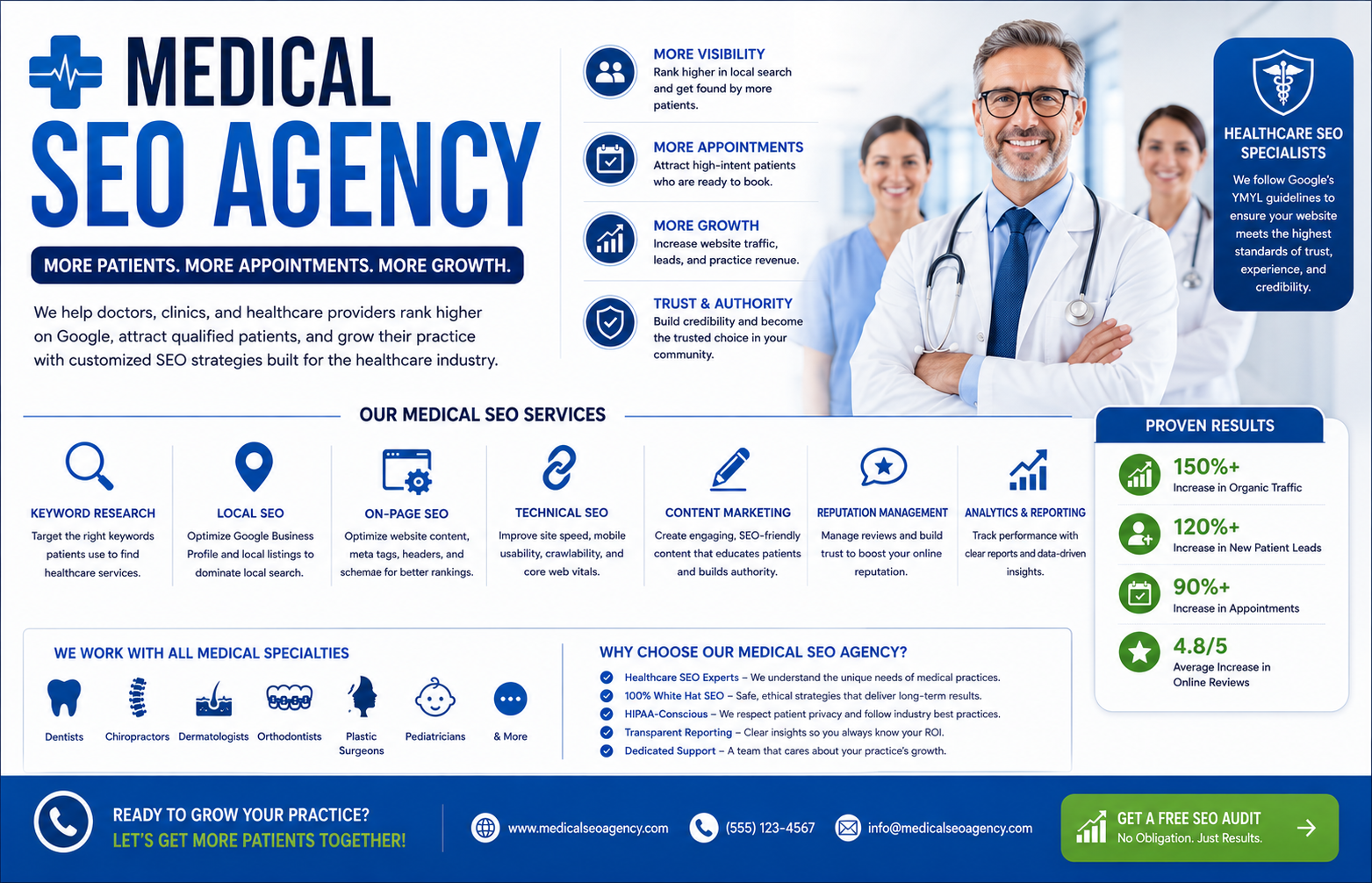
Partnering with a specialised medical SEO agency is one of the most effective ways to ensure your practice appears when local patients search for care. In today’s digital landscape, 77% of patients use search engines to find a new doctor, and nearly half of all Google searches are for local services. A trusted healthcare SEO company understands the unique intersection of healthcare regulations, patient search behaviour, and local ranking signals, while a specialised medical SEO agency delivers tailored strategies that generalist agencies often miss. Here are the essential strategies they use to help you dominate local search.
What Makes Medical SEO Different?
Patients don’t search the way doctors talk. They search for “knee pain doctor” rather than “orthopaedist,” and they use conversational phrases like “doctor open Saturday near me” . Healthcare is also a “Your Money or Your Life” (YMYL) category, meaning Google gives extra weight to content that demonstrates Experience, Expertise, Authoritativeness, and Trustworthiness (E-E-A-T) . A medical SEO agency tailors strategies specifically for these realities.
Key Strategies a Medical SEO Agency Uses for Local Dominance
1. Google Business Profile Optimisation
Your Google Business Profile (GBP) is your digital front door. A medical SEO agency ensures it’s fully optimised with:
-
Accurate NAP (Name, Address, Phone) consistent across all platforms
-
Hyper-specific categories (e.g., “Orthopedic Surgeon” not just “Doctor”)
-
Service menus listing every procedure and treatment
-
High-quality photos of your facility and staff
-
Booking integration for direct appointment scheduling
2. Patient-Focused Keyword Research
Instead of targeting medical jargon, agencies research how patients actually search:
-
Condition keywords: “slipped disc treatment,” “knee pain when climbing stairs”
-
Location-specific terms: “dermatologist in [city]” or “pediatrician accepting new patients near me”
-
Insurance-related searches: “doctor that takes Blue Cross”
3. Review Management (HIPAA-Compliant)
Reviews are critical for both rankings and patient trust. Over 84% of patients use online reviews to evaluate physicians . Agencies implement:
-
Automated review requests via HIPAA-compliant SMS or email after appointments
-
Two-step satisfaction surveys that filter unhappy patients before they reach Google
-
Professional responses to reviews that never confirm or deny a patient relationship, protecting PHI
4. Provider Pages and Location-Specific Content
Each physician needs a dedicated provider page featuring:
-
Professional headshot and board certifications
-
Medical school, residency, and clinical interests
-
Accepted insurance plans
-
Patient-friendly biography
-
Physicianschema markup
If your practice has multiple locations, create a landing page for each with unique, location-specific content, an embedded Google Map, and local testimonials .
5. Medical Schema Markup
Structured data helps Google and AI platforms understand your practice :
-
MedicalBusinessorPhysicianschema withmedicalSpecialty -
availableServicelisting each procedure -
isAcceptingNewPatients(a powerful search trigger) -
insurancelisting accepted plans
6. Technical SEO and Mobile Optimisation
Search engines reward fast, mobile-friendly sites. Most local searches happen on smartphones, so agencies ensure:
-
Mobile-first design with fast load times (under 3 seconds)
-
Core Web Vitals meeting Google’s benchmarks
-
Secure HTTPS and HIPAA-conscious forms
7. Local Citations and Directory Listings
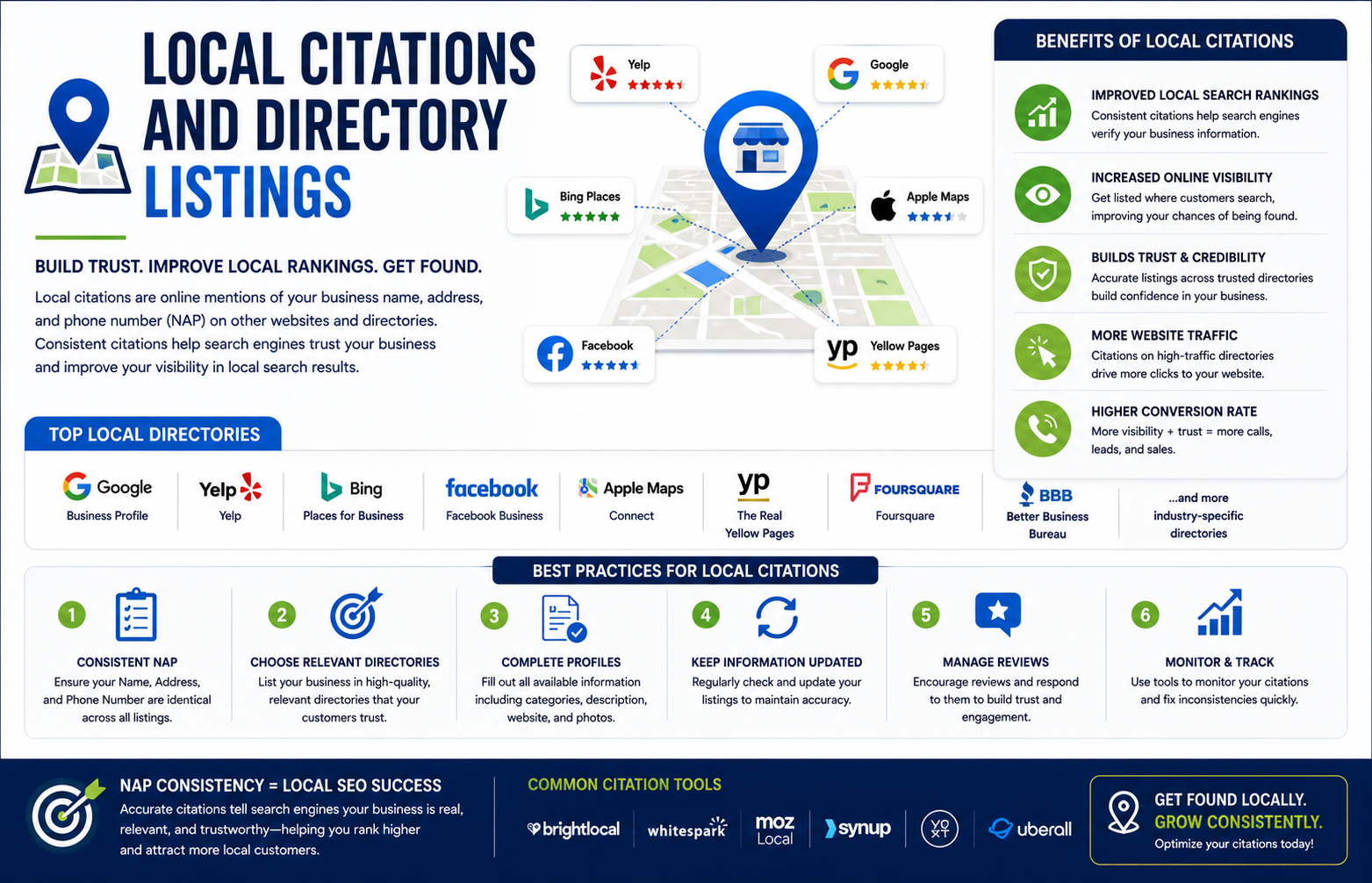
Consistency across directories builds trust and signals legitimacy:
-
Healthgrades, Vitals, Zocdoc, WebMD
-
State medical board directories
-
Local Chamber of Commerce
8. Condition and Insurance Pages
Patients search by condition, not specialty. Create dedicated pages for every condition you treat, including symptoms, when to see a doctor, and treatment options . Also create pages for each major insurance plan you accept—these low-competition pages target high-intent searches
Common Mistakes to Avoid
| Mistake | Why It Hurts |
|---|---|
| Ignoring reviews | Misses a key ranking signal and trust builder |
| Inconsistent NAP across directories | Confuses search engines and patients |
| No location-specific content | Fails to capture “near me” searches |
| Thin or duplicate provider pages | Undermines E-E-A-T signals |
| Slow mobile load times | Loses mobile traffic and conversions |
Conclusion
Want a medical SEO agency that helps you dominate local search, attract more patients, and build trust—while staying fully HIPAA-compliant?
Get in touch with Orbitix today.