







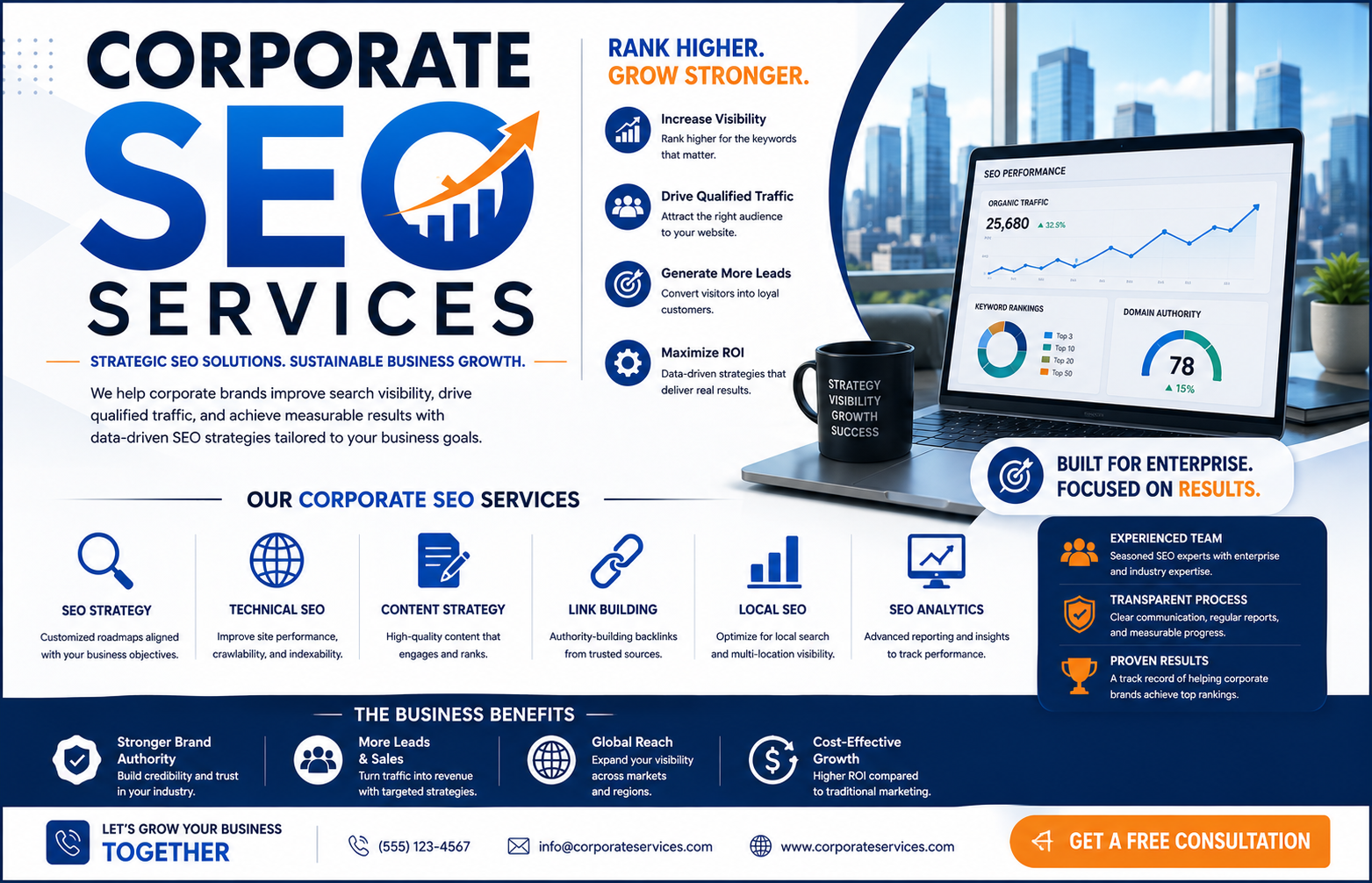
Corporate SEO Services for B2B Companies: Best Practices and Strategies
Corporate SEO services for B2B companies require a fundamentally different approach than standard business-to-consumer search engine optimization. Unlike B2C strategies that target quick conversions and high-volume keywords, professional corporate SEO services navigate complex sales cycles involving multiple decision-makers, extensive research phases, and high-value outcomes that demand authority and trust. Reviewing a B2B SEO case study can help businesses understand how these strategies generate qualified leads, improve search visibility, and support long-term revenue growth. This guide outlines the best practices and strategies that separate successful B2B corporate SEO from generic approaches.
What Makes Corporate B2B SEO Different
The primary distinction lies in the sales process. B2B buyers spend about 70% of their purchase journey conducting independent research online, and the average B2B deal requires 62 touchpoints across three channels before closing . Enterprise purchases often involve up to 15 stakeholders, each requiring different information at various stages of the decision-making process .
Unlike B2C SEO, which targets broad, high-volume keywords like “buy dresses online,” corporate SEO targets niche, high-intent keywords such as “enterprise data pipeline provider” or “HIPAA-compliant email service provider” . These terms generate lower search volume but attract qualified leads with genuine commercial intent, ultimately driving higher ROI .
Core Pillars of Effective Corporate SEO Services
A successful corporate SEO services strategy rests on four interconnected pillars:
1. Persona and Intent Research
Understanding your audience is the foundation. In B2B, you’re targeting people in working roles—CFOs, IT directors, product managers—each with distinct pain points and goals . For example, an IT director evaluating a VoIP solution wants integration details and technical specifications, while a CFO prioritises total cost and ROI .
Best practice: Build detailed buyer personas and map their search intent across the funnel. Early-stage buyers search for educational content (“how to automate reporting for finance teams”), while late-stage buyers look for specific solutions (“best reporting software for SaaS companies”) .
2. Topic Clusters and Pillar Pages
Topic clusters organise content around revenue-driving themes . A pillar page acts as the central hub covering a broad topic, while cluster pages dive deeper into specific subtopics and link back to the pillar .
Best practice: Identify 3–5 revenue pillars anchored to product categories or customer jobs-to-be-done. For each pillar, map questions for different stakeholder roles—engineers (specs, standards), procurement (MOQ, pricing), operations (installation, maintenance), and finance (ROI) . Create pillar pages with conversion-focused CTAs and plan 8–15 cluster assets per pillar .
3. Authority and Trust Building
Trust is the primary currency in B2B. Corporate SEO builds authority through thought leadership content, high-quality backlinks from industry publications, and consistent entity representation across the web .
Best practice: Produce authoritative content formats: whitepapers, case studies, comparison guides, and detailed blog posts . Implement structured data and schema markup to help search engines and AI systems understand your content’s context and relationships . Ensure consistent brand descriptions and topical coverage across your site and the broader web .
4. AI and Generative Engine Optimization (GEO)
Best practice: Structure your existing authority so AI models can use it . Create contextually rich content that demonstrates deep topic understanding and answers not just the immediate question, but also follow-up questions . Use comprehensive internal linking to help AI understand your content hierarchy and topic authority . Optimise for conversational, long-tail queries that mirror how users ask questions in AI platforms.
The Governance Challenge
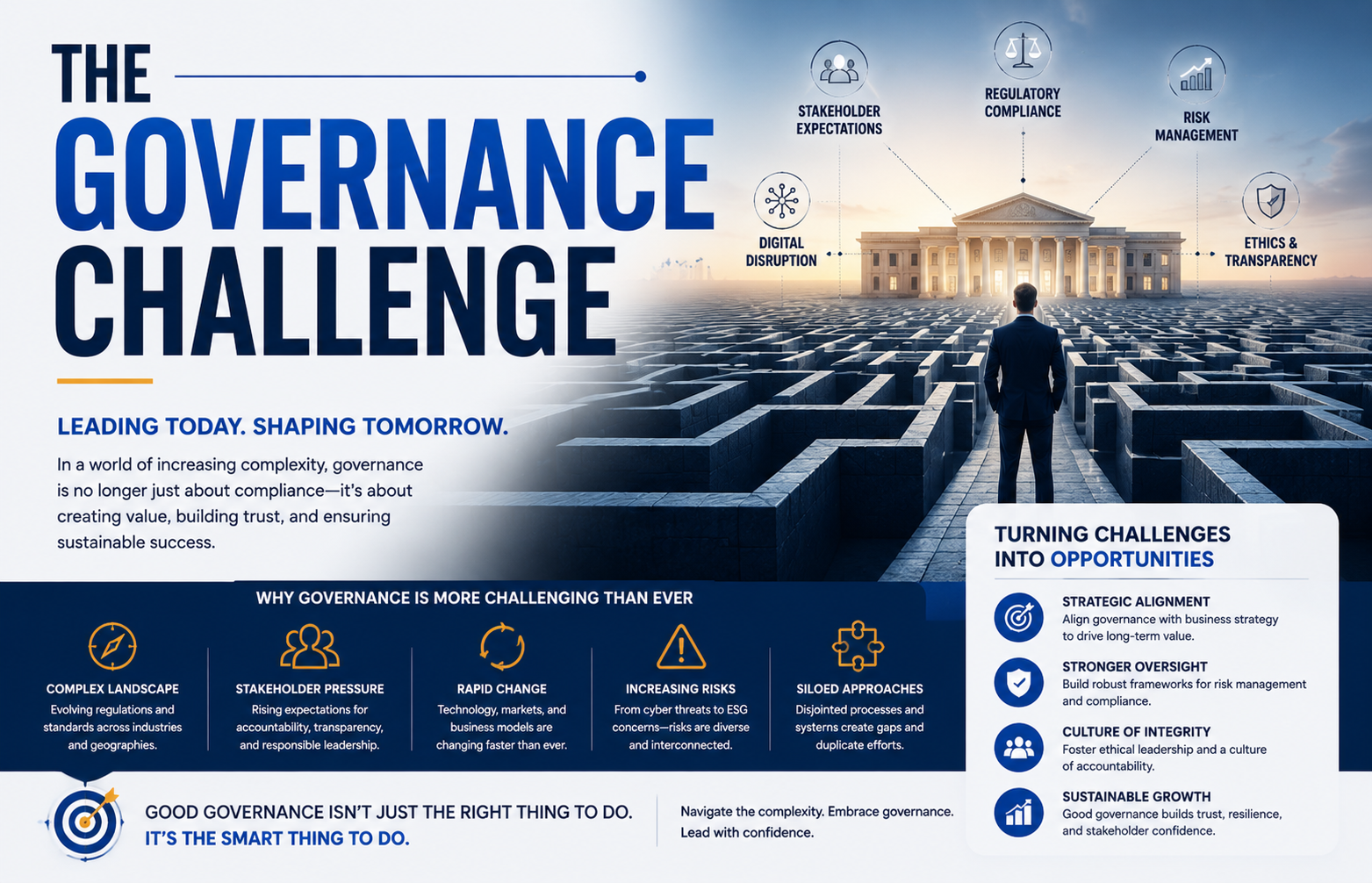
At enterprise scale, SEO becomes a governance and systems discipline rather than a tactics checklist . Failure modes include technical debt across thousands of pages, fragmented ownership where no single team is accountable for organic performance, slow execution requiring coordination across engineering, content, and brand teams, and absence from AI answers despite having real authority .
Best practice: Treat SEO as infrastructure, not a marketing activity . Embed SEO requirements upstream in site structure, content scope, taxonomy, product naming, data modelling, and internal linking decisions . Define cross-functional accountability for visibility, mandatory compliance standards, and executive sponsorship for search performance . Replace optional guidelines with enforceable governance through controlled templates, centralised entity definitions, and approved market deviations .
Measuring Corporate SEO Success
Traditional metrics like rankings and traffic are insufficient. For B2B corporate SEO, track:
-
Marketing Qualified Leads (MQLs) generated from organic search
-
Pipeline revenue attributed to SEO
-
Recommendation share of voice against named competitors in AI answers
-
System-level eligibility across markets, intent coverage, and entity coherence
Conclusion
Corporate SEO services for B2B companies demand a sophisticated approach that addresses complex sales cycles, multiple stakeholders, and the growing influence of AI-driven discovery. Success requires deep persona research, topic cluster content architecture, authority building, AI optimisation, and structural governance at scale. Treat corporate SEO as a strategic business function rather than a marketing campaign, and you’ll build the discoverability and trust needed to win B2B buyers.
Want corporate SEO services that navigate complex B2B sales cycles, win AI answers, and generate qualified leads—not just traffic?
Get in touch with Orbitix today.