







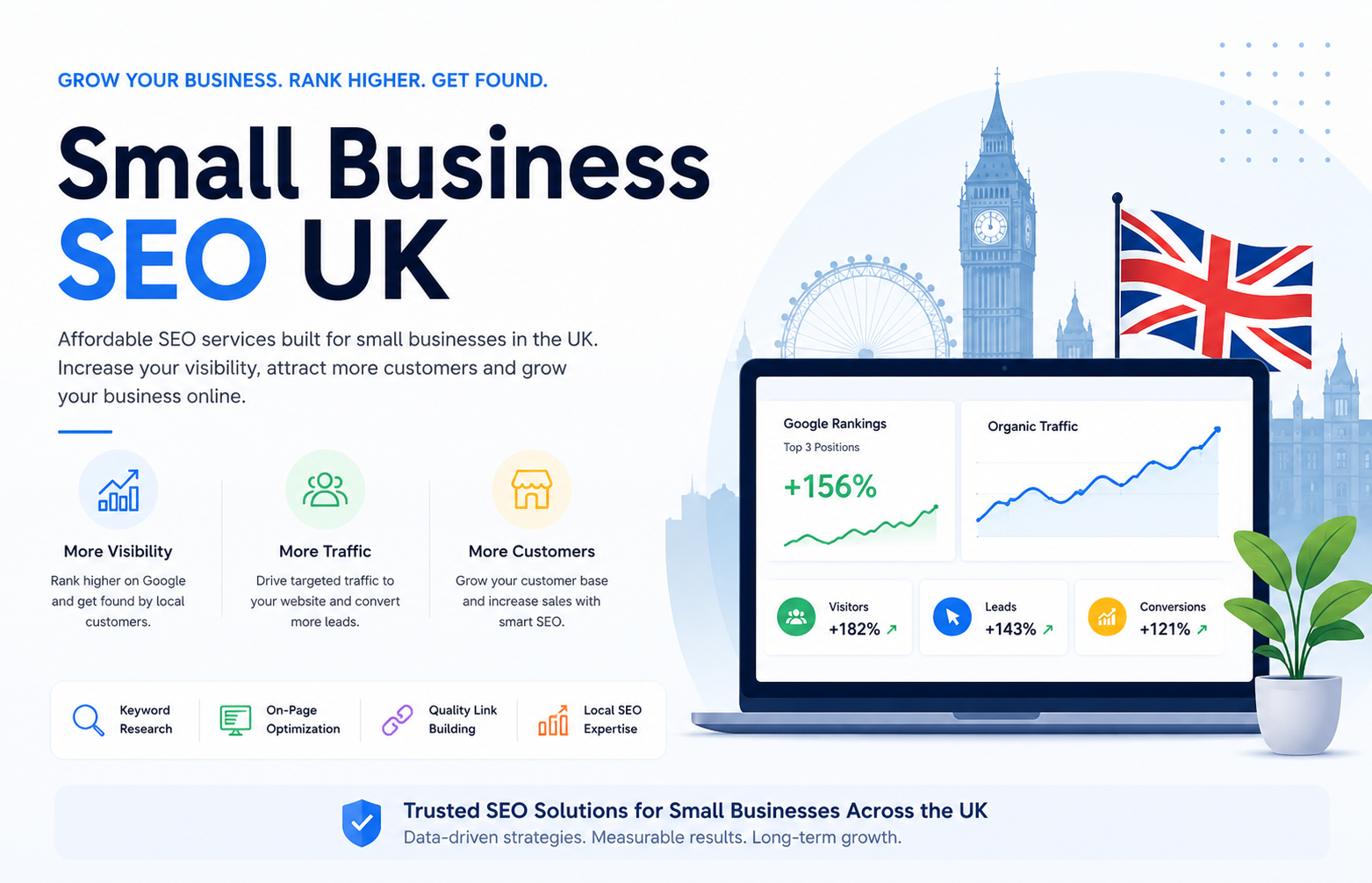
DIY Small Business SEO UK: A Step-by-Step Guide for Business Owners
Mastering small business SEO UK doesn’t require a massive budget or a dedicated marketing team. With the right approach, business owners can implement effective DIY strategies that improve local visibility, attract qualified leads, and compete with larger competitors. This step-by-step guide to small business SEO UK covers everything you need to know — from Google Business Profile optimisation to content creation and local link building. For businesses that need expert support, choosing the best SEO service providers UK can also help strengthen your strategy and achieve better long-term results without unnecessary costs.
Why Small Business SEO Matters in the UK
The UK is home to over 5.5 million small businesses, and most of them are competing for the same local customers . With 46% of all Google searches having local intent, appearing in search results is essential for survival . For UK small businesses, local SEO is even more critical because consumers trust local businesses and often prefer them over national chains .
Step 1: Optimise Your Google Business Profile
Your Google Business Profile (GBP) is the most powerful free tool for local visibility. Claiming and optimising it ensures your business appears when local customers search for your services .
What to Optimise:
-
Complete every field: Business name, address, phone number, website, categories, attributes, and service area
-
Add high-quality photos: Your shopfront, team, products, and work-in-progress shots
-
Write a compelling business description: Include primary keywords naturally
-
Set service areas: Specify the towns and postcodes you serve
-
Choose relevant categories: Primary and secondary categories that accurately describe your services
Post Regularly:
Google rewards active profiles. Post updates, offers, events, and new products weekly. Each post appears in your GBP listing and can drive engagement .
Step 2: Conduct Local Keyword Research
Local keywords are the foundation of small business SEO UK. They help you understand what potential customers are searching for in your area .
How to Find Local Keywords:
-
Brainstorm seed keywords: Think of the core services you offer (e.g., “plumber,” “dentist,” “café”)
-
Add location modifiers: Append city, town, or neighbourhood names (e.g., “plumber in Manchester,” “dentist in Islington”)
-
Use Google Autocomplete: Type a seed keyword into Google and note the suggested phrases
-
Check “People also ask”: Scroll down on search results pages for question-based keywords
-
Analyse competitors: See what keywords your competitors rank for using free tools like Ubersuggest
Prioritise Your Keywords:
Group keywords into:
-
Head terms: Broad, high-volume (e.g., “plumber”)
-
Long-tail terms: Specific, lower-volume, higher-intent (e.g., “emergency plumber open Sunday in Leeds”)
Step 3: On-Page SEO for Small Business Websites
Your website is the hub of your digital presence. Optimising its content helps search engines understand your services and location.
Key On-Page Elements:
-
Title tags and meta descriptions: Include primary keywords and location (e.g., “Plumber in Manchester | Emergency & Fast Response”)
-
Headings (H1, H2, H3): Use a clear hierarchy with keywords in headings
-
Image alt text: Describe images with relevant keywords (e.g., “kitchen renovation by London builder”)
-
URL structure: Keep URLs short and descriptive (e.g.,
/services/plumbing-emergency) -
Internal linking: Link related pages to help users and search engines navigate
Create Location-Specific Pages:
If you serve multiple areas (e.g., London, Birmingham, and Leeds), create dedicated pages for each location with unique, locally relevant content .
Step 4: Build Local Citations
Citations are online mentions of your business name, address, and phone number (NAP). Consistent citations across reputable directories are critical for local SEO .
Where to Build Citations:
-
Major UK directories: Yell, Thomson Local, FreeIndex, and Cylex
-
Industry-specific directories: Checkatrade (trades), TrustATrader, or your industry association
-
Local directories: Your town or city’s Chamber of Commerce, local council, or community sites
NAP Consistency Checklist:
-
Use exactly the same name, address, and phone number across every listing
-
Avoid abbreviations (e.g., “St” vs “Street”)
-
Include your postcode correctly
Step 5: Generate and Manage Customer Reviews
Reviews are a powerful ranking signal for local SEO. They also build trust with potential customers .
How to Get Reviews:
-
Ask happy customers: Send a follow-up email or text after service with a link to your Google review page
-
Automate review requests: Use tools like Trustpilot or NiceJob to send requests automatically
-
Make it easy: Provide direct links and simple instructions
How to Respond to Reviews:
-
Respond to every review: Thank positive reviewers and address negative reviews professionally
-
Be specific: Mention the service they received and your team member if appropriate
-
Apologise for negative reviews: Resolve complaints publicly and offer to discuss offline
Step 6: Create Locally Relevant Content
Content marketing helps you rank for more keywords and demonstrate expertise .
Content Ideas:
-
Local guides: “Best Coffee Shops in Bristol” (if relevant to your industry)
-
Service-specific articles: “How to Choose a Roofing Contractor in Your Area”
-
Case studies: Showcase successful projects with before-and-after photos
-
Customer testimonials: Highlight positive experiences with your services
Optimise for Local Search:
-
Mention specific locations, landmarks, and local events where relevant
-
Use local keywords naturally in headings and body text
-
Embed Google Maps showing your location or service area
Step 7: Build Local Backlinks
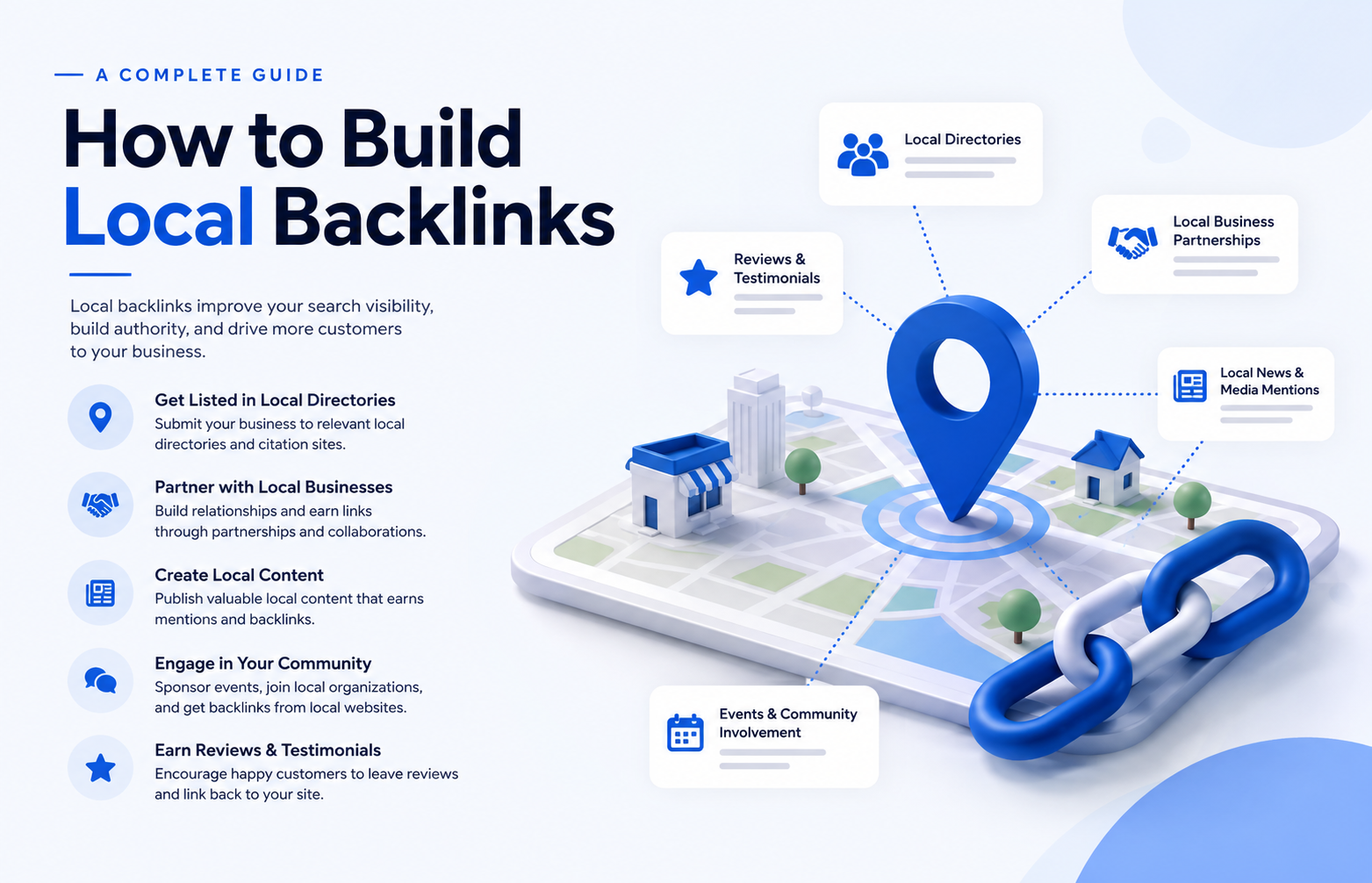
Backlinks (links from other websites to yours) are a major ranking factor. Local backlinks signal to Google that you’re a trusted, established part of your community .
How to Build Local Backlinks:
-
Join the Chamber of Commerce: Many offer a directory listing (with a backlink)
-
Sponsor local events or charities: Event pages often link to sponsors
-
Partner with local businesses: Cross-promote each other and link from your websites
-
Get featured in local media: Send press releases to local newspapers and blogs
Step 8: Track Your Progress
Monitor your DIY efforts to understand what’s working and where to improve.
Tools to Use:
-
Google Business Profile Insights: See how customers find you on Google Maps and Search
-
Google Search Console: Monitor your website’s search performance, clicks, and impressions
-
Google Analytics: Track website traffic, bounce rates, and conversions
Metrics to Track:
-
Local pack rankings: Where you appear for local searches
-
Organic traffic: How many visitors come from search engines
-
Phone calls: Track calls from your GBP and website
-
Review volume and average rating: Monitor month-over-month growth
Common DIY SEO Mistakes to Avoid
| Mistake | Why It Hurts | Fix |
|---|---|---|
| Duplicate content across pages | Google penalises duplicate content | Write unique content for each page |
| Ignoring Google Business Profile | Misses local Map Pack visibility | Optimise GBP as your #1 local asset |
| Inconsistent NAP across directories | Confuses Google and customers | Audit and correct citations |
| No review management | Misses trust signals and ranking boost | Respond to all reviews, ask happy customers |
| Not tracking progress | You won’t know what’s working | Set up Google Search Console and Analytics |
Conclusion
DIY small business SEO UK is entirely achievable with a systematic approach. By working with or learning from UK WordPress SEO experts, optimising your Google Business Profile, conducting local keyword research, building citations, generating reviews, and creating local content, you can improve visibility and attract more customers — all without hiring an agency.
Want to implement a DIY small business SEO UK strategy that drives local visibility — with a partner who can guide you through the process?
Get in touch with Orbitix today.