







How AI Search Is Changing Automotive Search Engine Optimization
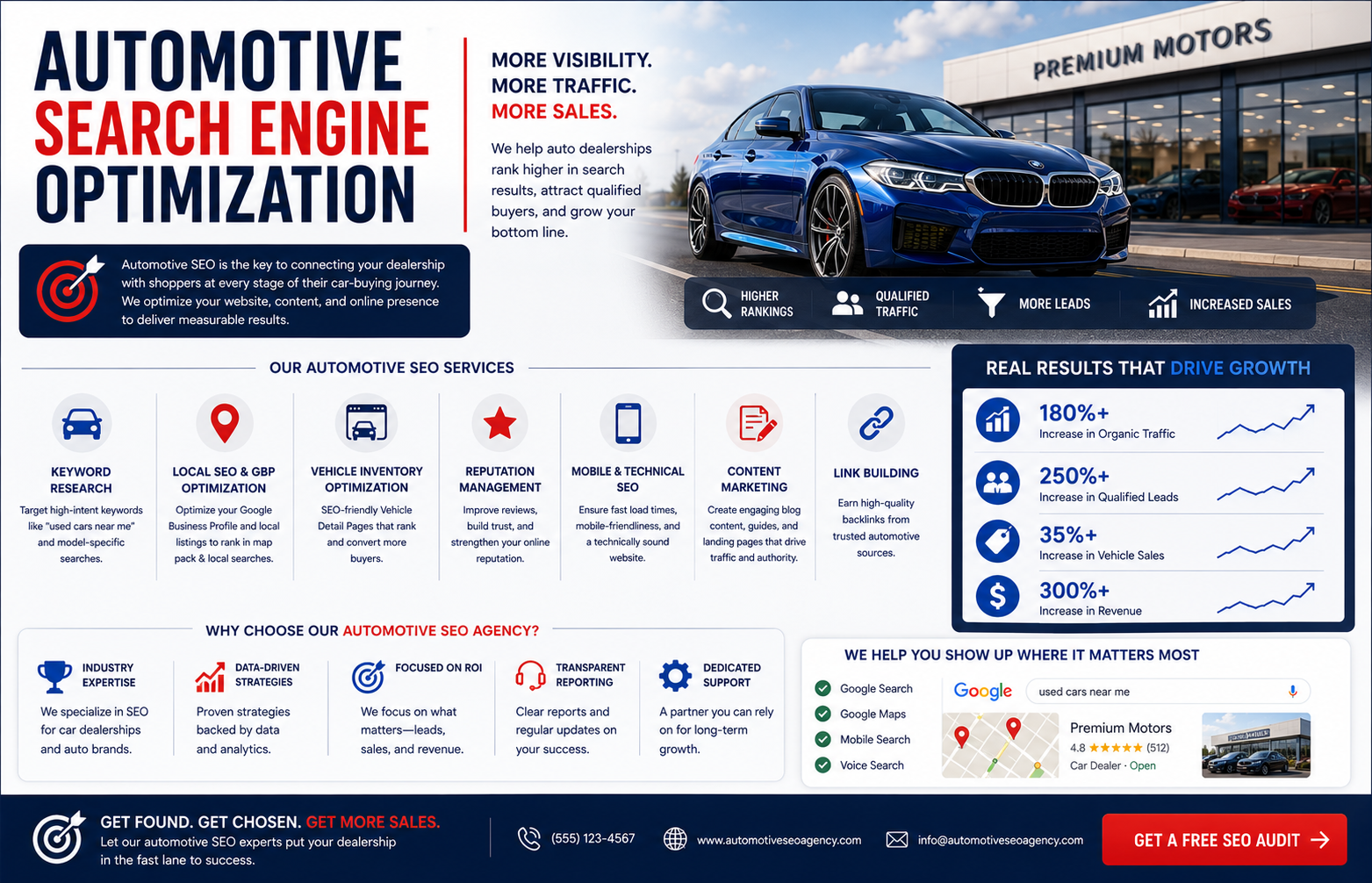
Automotive search engine optimization is undergoing its most significant transformation since Google’s early days, driven by the rapid adoption of AI-powered search tools. The days of relying solely on keyword-stuffed content and traditional ranking tactics are fading, as conversational AI platforms like ChatGPT, Perplexity, and Google’s Gemini reshape how car buyers discover dealerships. Today, effective automotive search engine optimization must account for a new reality: shoppers are now asking full-sentence questions and expecting synthesized answers, often without ever clicking through to a dealership website. This shift from “search” to “answer” means that traditional ranking alone no longer guarantees visibility. To stay competitive, dealerships should also invest in automotive local SEO to improve visibility in location-based searches, ensuring nearby buyers can easily find their inventory and services while strengthening their presence in AI-driven search results.
The Shift from Keywords to Conversations
Car buyers are moving away from short, keyword-based searches toward more conversational, natural language queries. Instead of typing “F-150 for sale near me,” they’re asking AI tools: “What truck should I buy to tow a boat, fit a family of three, and have storage?” . Google itself has confirmed this shift, noting that queries are now “far more conversational,” with users typing full sentences and having complete conversations with search engines . This change means that automotive search engine optimization must now focus on creating content that directly answers these specific, nuanced questions rather than simply targeting high-volume keywords.
How Generative Engine Optimization (GEO) Complements Traditional SEO
As AI search grows, a new discipline called Generative Engine Optimization (GEO) has emerged alongside traditional SEO . While SEO focuses on ranking in traditional search results like Google and Bing, GEO aims to ensure your dealership’s content is discovered, understood, and cited by AI-driven platforms like ChatGPT and Perplexity . However, the good news is that AI visibility does not require a separate strategy—it builds on the same fundamentals that drive strong SEO. Clear, helpful content, accurate data, and consistent updates remain the foundation .
What Gets Cited by AI Systems
AI platforms like ChatGPT and Perplexity synthesize answers by pulling from multiple authoritative sources. Understanding what makes content more likely to be cited is key to modern automotive SEO :
| Factor | Why It Matters |
|---|---|
| Authoritative, structured content | Comprehensive guides and technical explanations are more likely to be cited than generic pages |
| Direct question answering | FAQ sections and “how-to” guides align with natural language queries |
| Specific data and verifiable facts | AI needs concrete details like pricing, specifications, and EPA ratings |
| Fresh, current information | Outdated content is deprioritized for current model-year questions |
| Schema markup | Helps AI parse content structure and extract information accurately |
The Zero-Click Reality
Industry research suggests that more than 80% of Google searches in 2025 ended without a single click, driven by AI-generated answers, summaries, and featured content . This trend extends to AI platforms—on Perplexity, the zero-click rate reaches up to 93% . For dealerships, this means that “being visible” has fundamentally changed. It’s no longer enough to attract clicks; your brand must be accurately represented within AI-generated answers, even if shoppers never visit your site.
Reviews and Reputation Are Now Critical
In this new landscape, reviews have become a critical factor for AI visibility. When an LLM searches for “find me a Ford dealer near me,” it looks for consensus—and reviews are the clearest signal of that . The words customers write matter more than star ratings alone; AI platforms analyze the actual text of reviews to determine sentiment and authority . Dealerships should treat Google reviews as roughly 70% of the effort, while also maintaining a presence on platforms like DealerRater, Cars.com, and even local Facebook groups and Reddit .
What Dealerships Should Do Now
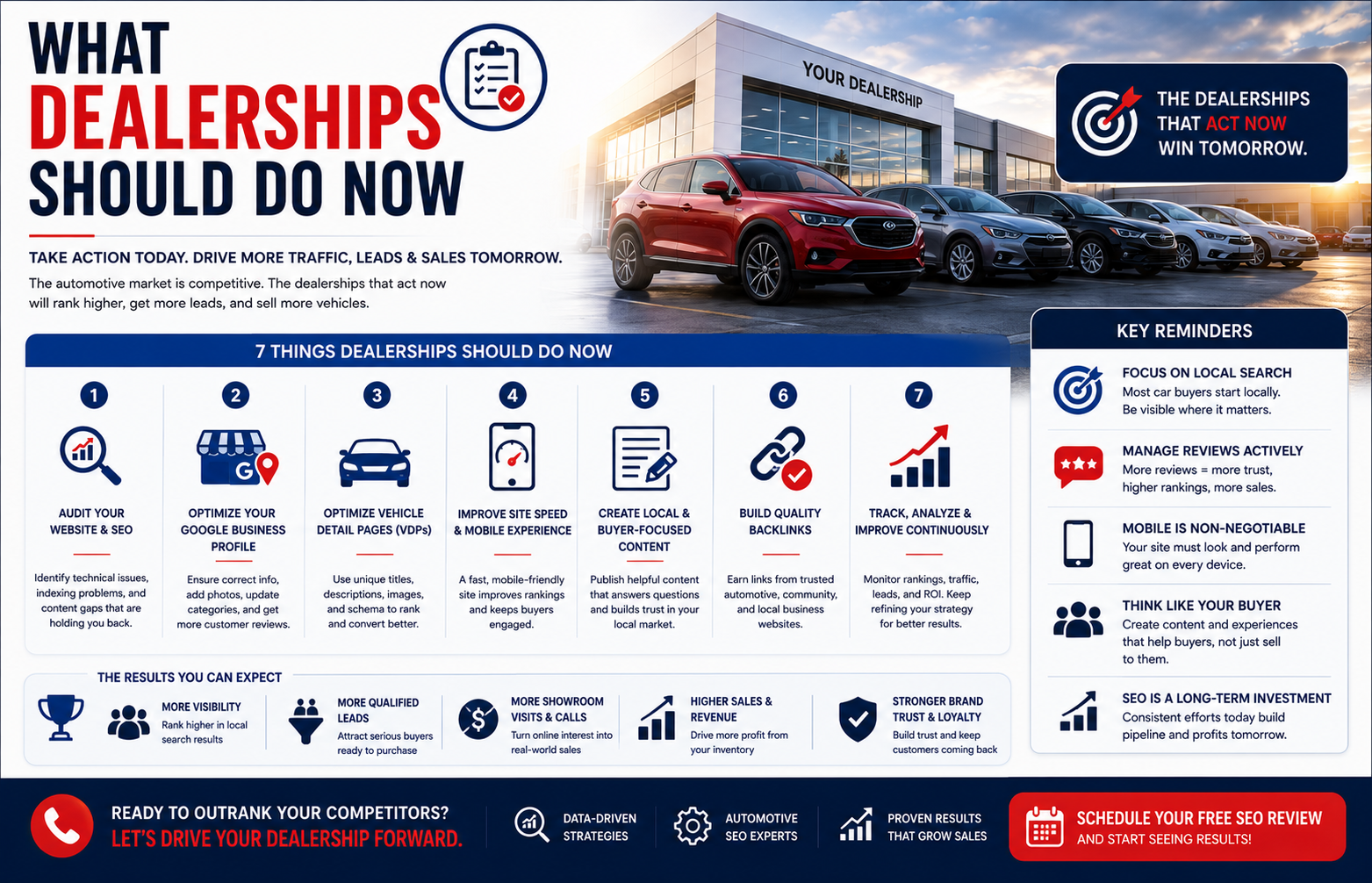
While AI search is growing rapidly, it still represents a small fraction of overall traffic for most dealerships—traditional search remains the primary driver of leads . However, the trend is clear, and early adopters can gain a first-mover advantage . Here’s where to focus:
-
Strengthen your SEO fundamentals: Clear, helpful content, good website structure, and accurate data are the foundation for both traditional and AI visibility .
-
Create content that answers questions: Develop FAQ pages, comprehensive guides, and content that directly addresses common shopper queries in natural language .
-
Build your reputation: Actively manage reviews across multiple platforms—the text matters as much as the stars .
-
Maintain accurate, unique content: Avoid duplicating manufacturer content and create original, locally relevant material that demonstrates real expertise .
-
Consider implementing LLMs.txt files: This emerging standard helps guide AI crawlers to properly discover and represent your content .
Conclusion
Automotive search engine optimization is evolving, but the core principles remain the same: clear, helpful, and authoritative content wins. AI search isn’t replacing SEO—it’s extending its reach into new channels. Partnering with an experienced automotive SEO agency can help dealerships adapt to these changes through data-driven strategies and optimized content. The dealerships that thrive will be those that focus on genuinely useful, human-written content, maintain a strong reputation through reviews, and structure their sites so both search engines and AI can easily understand them.
Want automotive search engine optimization that positions your dealership for AI visibility while driving leads through traditional search?
Get in touch with Orbitix today.