






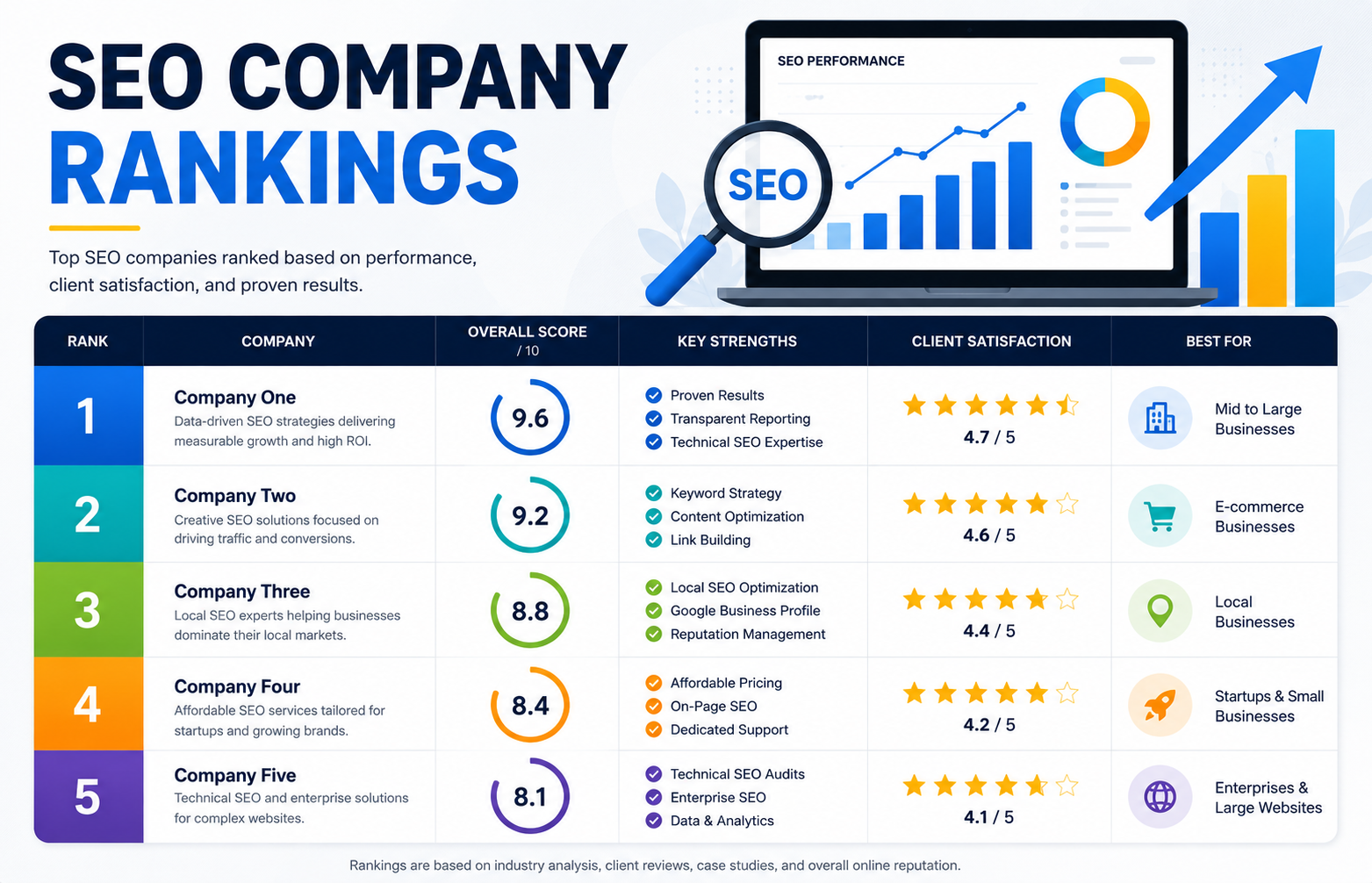
How to Improve Your SEO Company Rankings and Win More Clients
Improving your SEO company rankings requires a different approach than ranking a client’s site. While the technical fundamentals remain the same, an SEO company for window cleaning needs a targeted approach to reach potential customers online. SEO agencies face a unique challenge: you are competing for visibility against dozens of other businesses, many with significantly more indexed pages and established authority. A specialised SEO company rankings strategy focuses on service-city combinations, location-specific landing pages, and demonstrating real results through case studies—not just generic content that could apply to any agency.
Why Standard SEO Won’t Work for Your Agency
Many agencies make the mistake of applying their client playbook to their own website. The result is a beautiful site that no one finds. Here’s why:
Your competitors have more pages – Your top three local competitors probably have 1,200+ indexed pages, targeting every service-city combination you haven’t thought of yet . If you have 12 pages and they have 1,400, you’re not competing—you’re invisible .
Generic service pages don’t rank – “We offer comprehensive SEO solutions” ranks for nobody. “We rank dentists on Google in under 90 days” ranks for everyone searching .
Google rewards specificity – One page = one service + one city. Mixing service and location on one page confuses both Google and prospects .
Proven Strategies to Improve Your SEO Company Rankings
To climb the SEO company rankings, you need a systematic approach that builds authority and demonstrates measurable results.
Build Service-City Landing Pages at Scale
The winning formula is straightforward: list your 6-8 core services, list the 3-7 cities you actually serve, and create dedicated landing pages for each combination .
Example structure:
-
/[service]→[Service Name] for [Industry Type] -
/[service]-[city]→[Service Name] in [City] – [Your Agency Name]
Essential elements per page:
-
300-400 words explaining the service, who it’s for, and one specific result you’ve achieved
-
Specific client results from that city
-
Embedded Google Business Profile
-
Schema markup
-
Internal links from your navigation and footer
Add Location Pages for Your Service Radius
If you serve 5 cities but your website only mentions all 50 states, Google won’t rank you locally . The agencies that win have 20-100 location pages—you probably have zero .
Quick location page structure:
-
Title:
[Your Service] in [City] – [Your Agency Name] -
First paragraph: “We’re an SEO agency serving [City] and [nearby cities]. We’ve helped [X] local businesses rank on page one.”
-
3-4 specific results from clients in that city
-
Google Business Profile embed
-
Links from footer and navigation
Use Case Studies and Real Numbers
“Award-winning” and “results-driven” mean nothing. “Grew client’s organic revenue from $80K to $340K in 8 months” means everything . Use real numbers from real clients.
Implement Structured Data and Schema
Competitors using LocalBusiness + AggregateOffer schema show pricing, service areas, and review counts directly in search results . You show plain text if you skip schema markup.
Create an Answer Capsule for AI Visibility
47% of enterprise buyers start vendor research with AI assistants, ahead of 43% using Google Search . To be cited by both Google and AI platforms:
-
Place a 30-60 word answer capsule directly under your heading
-
Use named authors (real humans) with bylines and LinkedIn links
-
Expert-attributed content is 3.2x more likely to be cited by LLMs
Update Old Pages Regularly
A service page written in 2020 signals staleness to Google . Update one service page per month with a new client case study or refreshed methodology section. Google rewards freshness .
Common SEO Company Ranking Mistakes
| Mistake | Why It Hurts | Fix |
|---|---|---|
| Generic service pages | Google penalises thin content | Add specific results and location details |
| One page for multiple cities | Confuses Google | One service + one city per page |
| Neglecting GBP | 40-60% of local searches start in Maps | List services explicitly in GBP description |
| No schema markup | Missing rich results in SERPs | Use LocalBusiness + AggregateOffer schema |
| Never updating content | Signals staleness to Google | Update pages with fresh data monthly |
Measuring Your SEO Company Rankings Success
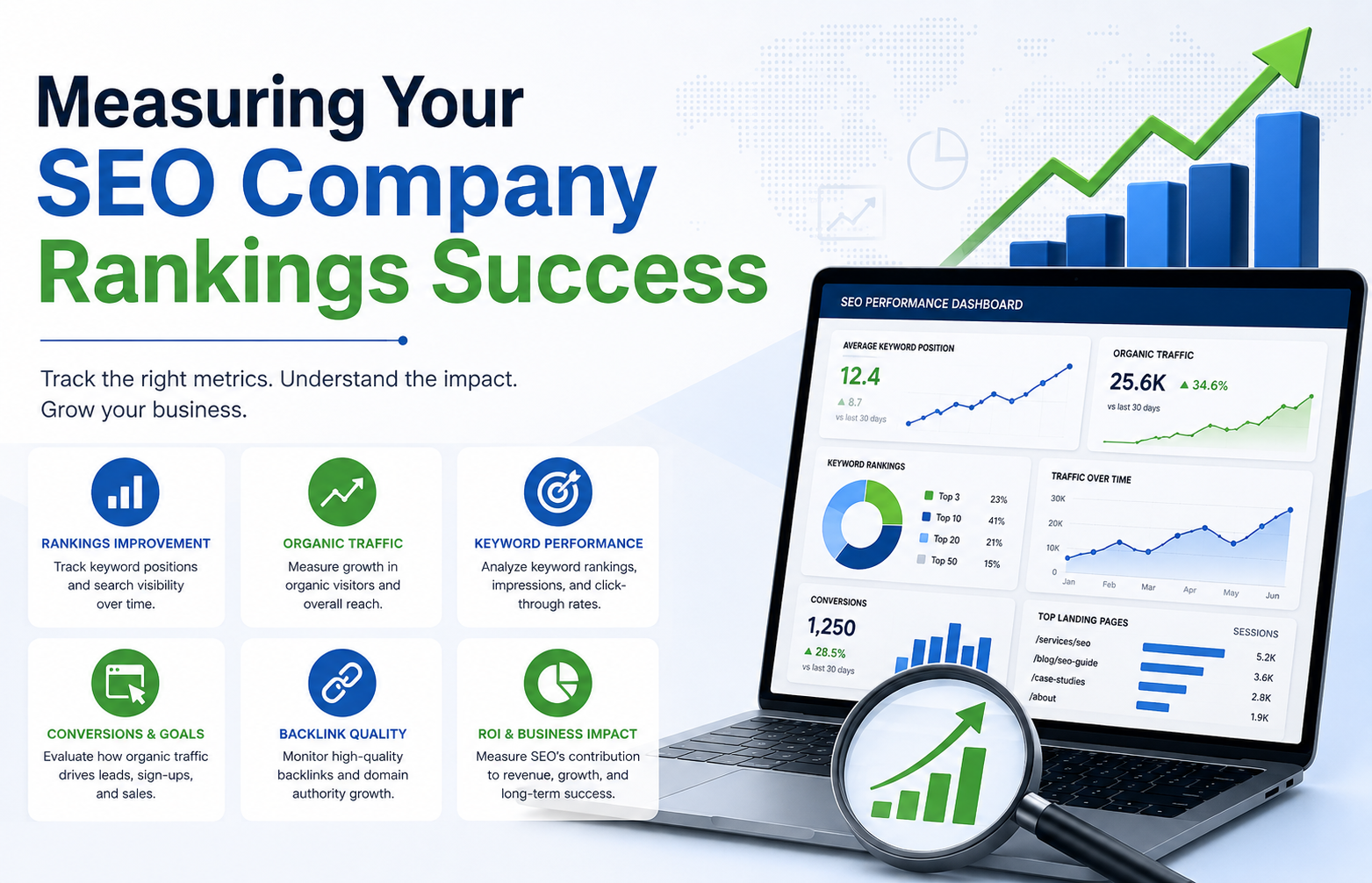
Track these metrics monthly:
-
Indexed page count – How many pages Google has indexed (competitors may have 10-40x more)
-
Local pack rankings – Your position for “[service] near me” and “[service] in [city]”
-
Case study conversions – Which results pages generate the most enquiries
-
AI visibility – Whether your brand appears in ChatGPT, Perplexity, and AI Overviews
-
Phone calls and form submissions – The ultimate measure of client acquisition
Conclusion
Want to improve your SEO company rankings with a proven strategy that builds authority, wins visibility in AI search, and attracts clients ready to buy?
Get in touch with Orbitix today.