






From Design to Launch: What a WordPress Web Development Company Actually Does
A WordPress web development company does far more than just “build websites” — it transforms business requirements into a scalable, secure, and search-optimized digital platform. While WordPress powers over 40% of the web, most sites are built poorly: bloated with unnecessary plugins, slow to load, and difficult for marketing teams to manage. A professional WordPress web design company focuses on creating an attractive, user-friendly, and high-performing website, while a WordPress web development company follows a structured process from discovery through launch and beyond, delivering a site that actually supports business growth rather than creating technical debt.
What a WordPress Web Development Company Actually Delivers
Phase 1: Discovery & Planning
The first phase defines the project’s goals, scope, and requirements in writing before any code is written . Without this step, projects are far more likely to experience scope creep and blown timelines .
Key deliverables:
-
Business KPIs — qualified leads, demo requests, or online sales targets
-
Technical scope — WooCommerce, multilingual, headless WordPress, or CRM/ERP integrations
-
Compliance requirements — GDPR, PCI, accessibility standards
-
Resource planning — developers, designers, copywriters, and infrastructure (hosting, domain, SSL)
Phase 2: Design
Wireframes and visual designs are created based on the discovery work, signed off before development begins . The design phase ensures the final product matches brand expectations and user experience goals.
Key considerations:
-
Theme selection — lightweight, responsive themes like Astra or GeneratePress for optimal Core Web Vitals
-
Site architecture — sitemap defining the hierarchical structure for user navigation and search engine indexing
-
Content-first approach — designing around the content that will drive conversions
Phase 3: Development
Development happens on a staging environment — a private copy of the site — never on the live site visitors see . This allows safe testing of updates and features without risking the live site.
Core technical work:
-
Custom theme development — hand-coded themes strip unnecessary code, improving speed and reducing bloat
-
Custom plugin development — packaging functionality (calculators, custom post types, integrations) into portable, independent plugins
-
Plugin management — limiting plugins to strictly necessary features, verifying compatibility and update frequency
-
Performance tuning — caching, image optimization, query tuning, and reducing bloat
-
Security hardening — WAF, 2FA, least-privilege access, and vulnerability scanning
Technical non-negotiables:
-
Core Web Vitals targets (LCP under 2.5s, INP under 200ms, CLS under 0.1)
-
PHP/WordPress version roadmaps
-
Gutenberg block standards
-
Automated testing and staging parity
Phase 4: Content & SEO Integration
Content is the primary value carrier of a website. Its SEO optimization drives visibility in search results .
On-page SEO foundations built during development:
-
Schema markup for rich snippets and AI visibility
-
Clean information architecture
-
Internal linking strategy
-
XML sitemaps and 301/404 handling
-
Meta title and description structure (title tag under 60 chars, meta description under 155 chars)
-
Heading hierarchy (single H1 per page, H2 for main sections, H3 for subsections)
Modern SEO considerations:
A professional WordPress development company bakes in SEVO (Search Everywhere Optimization) and AEO (Answer Engine Optimization) readiness: tight topical clusters, robust schema, and technical signals that earn citations in AI overviews .
Phase 5: Testing & QA
Before launch, the site undergoes comprehensive testing :
-
Functionality testing — forms, integrations, and all interactive elements
-
Responsive testing — across devices and browsers
-
Speed testing — Core Web Vitals and Lighthouse performance goals
-
Security checks — hardening, vulnerability scanning, and incident response documentation
Phase 6: Launch & Handover
The tested build is pushed live with a plan for DNS, caching, and redirects .
Post-launch deliverables:
-
Client training on content editing and site management
-
Analytics/GA4 setup
-
Documentation of code and processes
-
Code and content ownership clarification
Phase 7: Ongoing Support & Maintenance
The build is a moment; the maintenance is the relationship. A professional WordPress web development company structures its services around this reality .
Ongoing services:
-
WordPress core, theme, and plugin updates
-
Regular backups and restore testing
-
Security monitoring and patching
-
Performance tuning and iterative improvements
-
SLA-defined response, restore, and patching windows
What to Look for in a WordPress Web Development Company
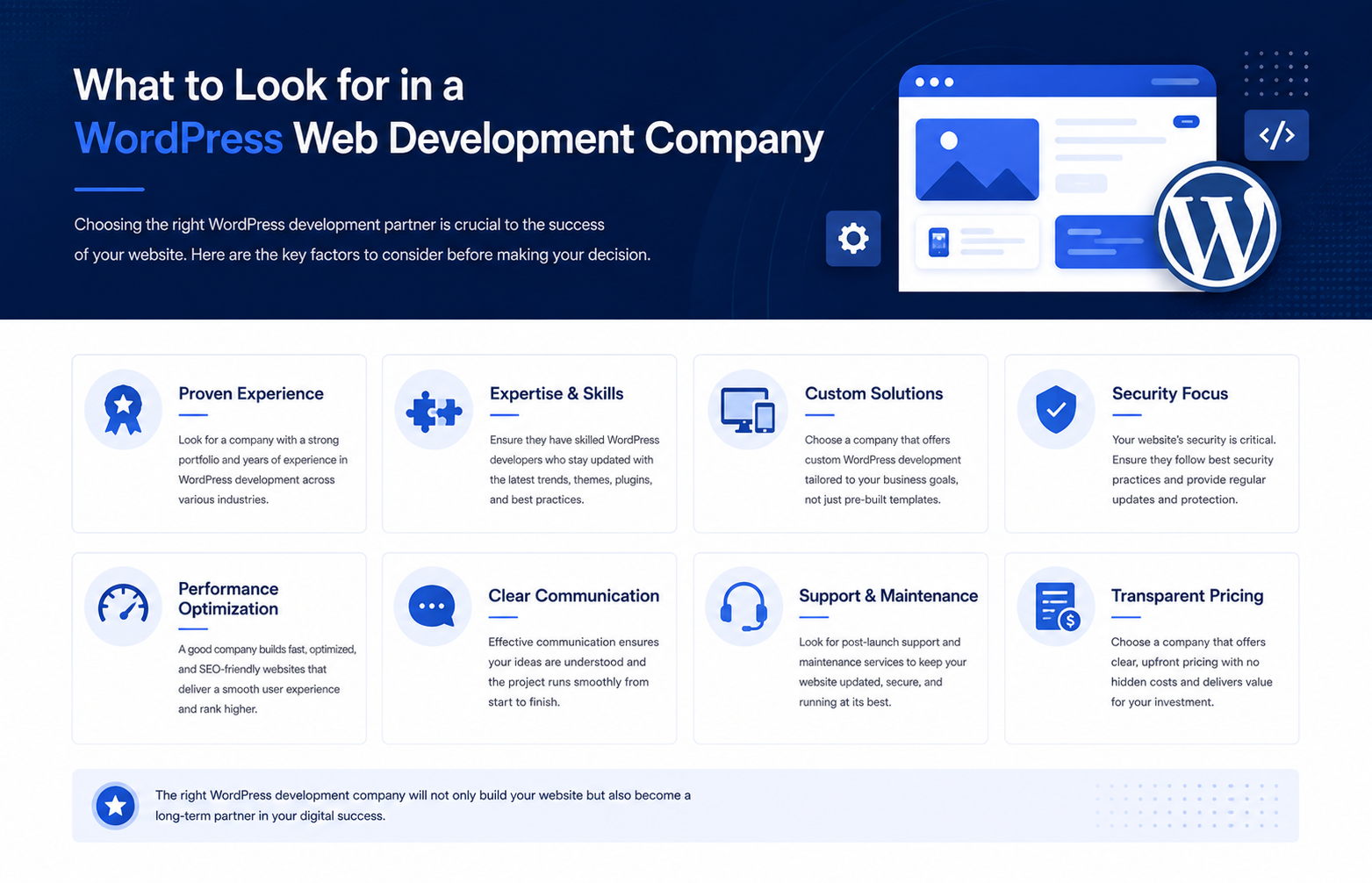
| Factor | What to Expect |
|---|---|
| Process documentation | Clear methodology from discovery to launch |
| Staging environment | Development happens on a private copy, never live |
| Custom development | Hand-coded themes and plugins, not template modifications |
| Performance budgets | Core Web Vitals and Lighthouse targets enforced |
| SEO foundations | Schema, clean IA, and technical signals built in, not added after launch |
| Transparent pricing | Scope defined upfront, no hidden fees |
| Ongoing support | Post-launch maintenance, not just “launch and leave” |
Conclusion
Want a WordPress web development company that follows a structured process from discovery to launch — delivering a fast, secure, and search-optimized site you can actually manage?
Get in touch with Orbitix today.