







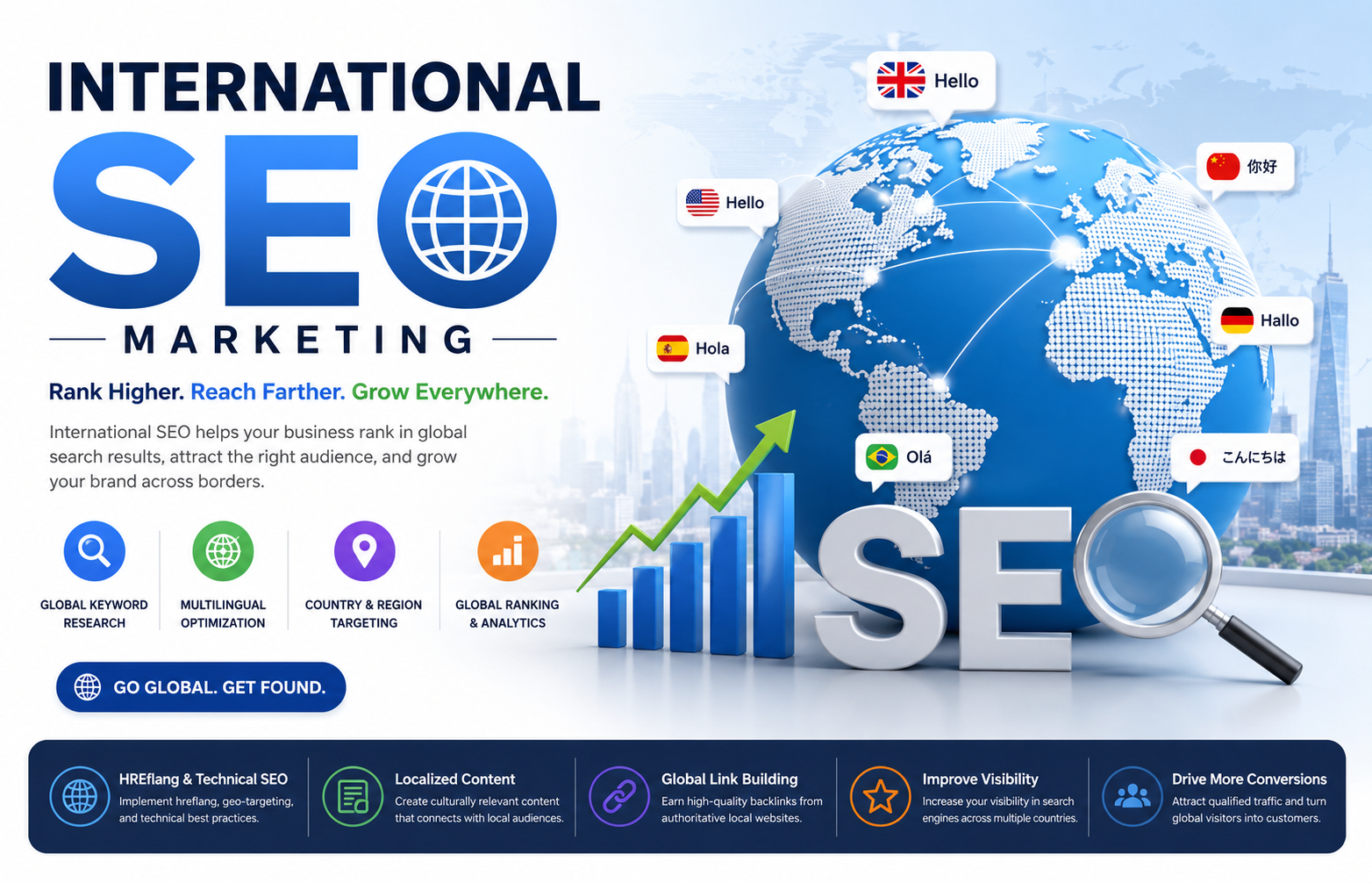
Why Most International SEO Marketing Campaigns Fail (And How to Fix Them)
Why Most International SEO Campaigns Fail
1. Translation Is Not Localisation
The most common mistake: translating existing content into the local language and calling it done . Automated translations miss cultural nuance. A different spelling can throw off customers—Australians expect “colour,” not “color.” What Aussies call a “caravan,” New Zealanders call a “motorhome”—using the wrong term means customers may not know what you’re selling . Poor translations scream “spam” to both users and algorithms .
2. Misconfigured Hreflang Tags
Missing reciprocals or mismatched language codes send your site into a ranking freefall and create expensive technical debt . Hreflang errors cause content cannibalisation and incorrect geotargeting—the wrong page ranks in the wrong market . For example, a U.S. organic page might outrank the intended Australian page simply because hreflang was implemented incorrectly .
3. Overreliance on English Content
Even in countries with high English proficiency, native-language pages consistently outperform English-only versions . You’re literally leaving revenue on the table . 76% of online shoppers prefer to buy products with information in their own language, and 40% will not buy from websites in other languages at all .
4. Cross-Market Silos
In multinationals, PPC and SEO teams often operate in silos geographically, with multiple or competing agency support . The PPC team in Germany runs its keyword bidding strategy independently of the global roadmap. SEO might be centralised in the U.S., disconnected from local market ad performance insights . This isolation leads to missed opportunities to prioritise SEO content based on high-converting paid keywords.
5. No Real Local Presence
International SEO fails when you launch without a real local presence . Crawl accessibility now matters as much for AI systems as it does for Google . Without local signals—hreflang, LocalBusiness schema, country-level domains, consistent directory listings—search engines cannot confirm your business entity’s local relevance .
How to Fix Your International SEO Marketing Strategy
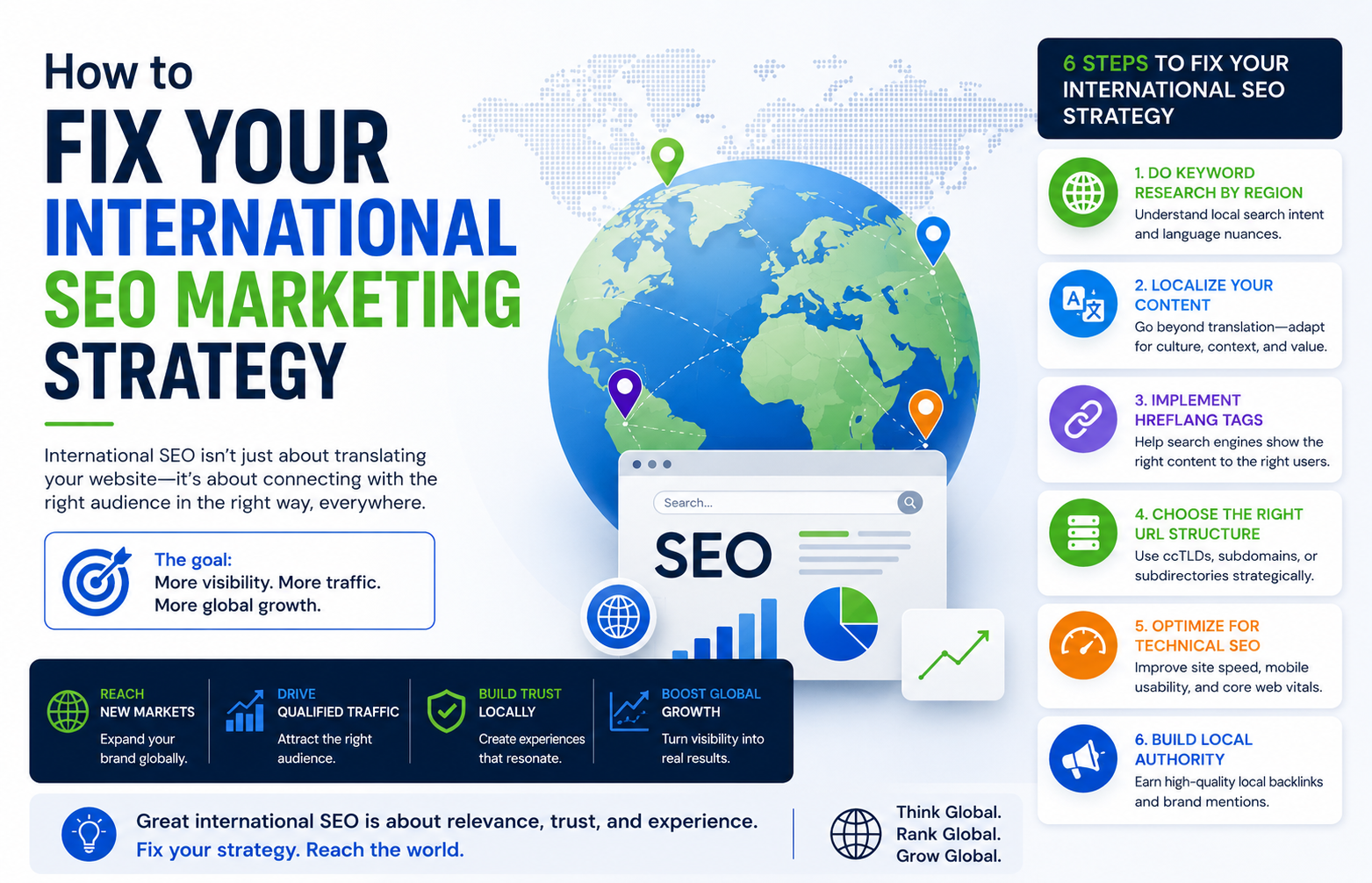
1. Replace Machine Translation with Human Localisation
Use AI as a raw translator, then apply human native speakers for your most important pages—homepage, main landing pages, top PDPs . Localisation without native input kills authenticity—fast .
2. Audit Your Hreflang Implementation
Fix critical errors first. Check for missing reciprocals, mismatched language codes, and ensure regional versions (e.g., en-AU for Australia, en-GB for the UK) are correctly configured .
3. Match Your Team Model to Market Complexity
A central SEO squad scales consistency. Adding native specialists in high-value regions adds cultural nuance and speed without losing strategic control .
4. Configure GA4 for Country-Level Segmentation
Most teams rely on analytics frameworks designed for single-language sites—they don’t scale internationally . Set up accurate country-level segmentation to track what’s actually working in each market.
5. Create Distinct Content Strategies for Each Market
Don’t just translate blog posts. Speak to region-specific problems, incorporate local examples and cultural references, position against local competitors—not global ones . Localise currency, measurements, date formats, and culturally appropriate imagery .
6. Test Content in Real Target-Market Conditions
What works in the U.K. may fail in Japan . Cost per click, competition, searcher behaviour, and device usage differ by market . Validate search demand, competitive gaps, and ROI before rolling out .
Common Mistakes to Avoid
| Mistake | Why It Fails | How to Fix It |
|---|---|---|
| Translation without human review | Lowers trust, poor UX | Use native speakers for key pages |
| Misconfigured hreflang | Ranking freefall, cannibalisation | Audit reciprocals and language codes |
| Overreliance on English content | Leaves revenue on the table | Create native-language pages for each market |
| Siloed PPC and SEO teams | Missed opportunities, inefficient budgets | Share search intelligence across regions |
| No local presence or signals | Low credibility, poor AI visibility | Implement hreflang, schema, and local directories |
Conclusion
International SEO marketing fails when leaders treat expansion as a rollout exercise rather than a localisation challenge. It succeeds when you invest in cultural nuance, technical hygiene, and market-specific measurement. The same principle applies to attorney SEO marketing, where understanding local search intent and legal market competition is essential for attracting qualified clients. The good news: the ROI is proven. Fix what’s broken, and your campaigns can achieve 3x returns or more.
Want international SEO marketing that actually works—with human localisation, correct hreflang, and real visibility in every market?
Get in touch with Orbitix today.