





Digital Marketing for Insurance Brokers: Common Mistakes to Avoid
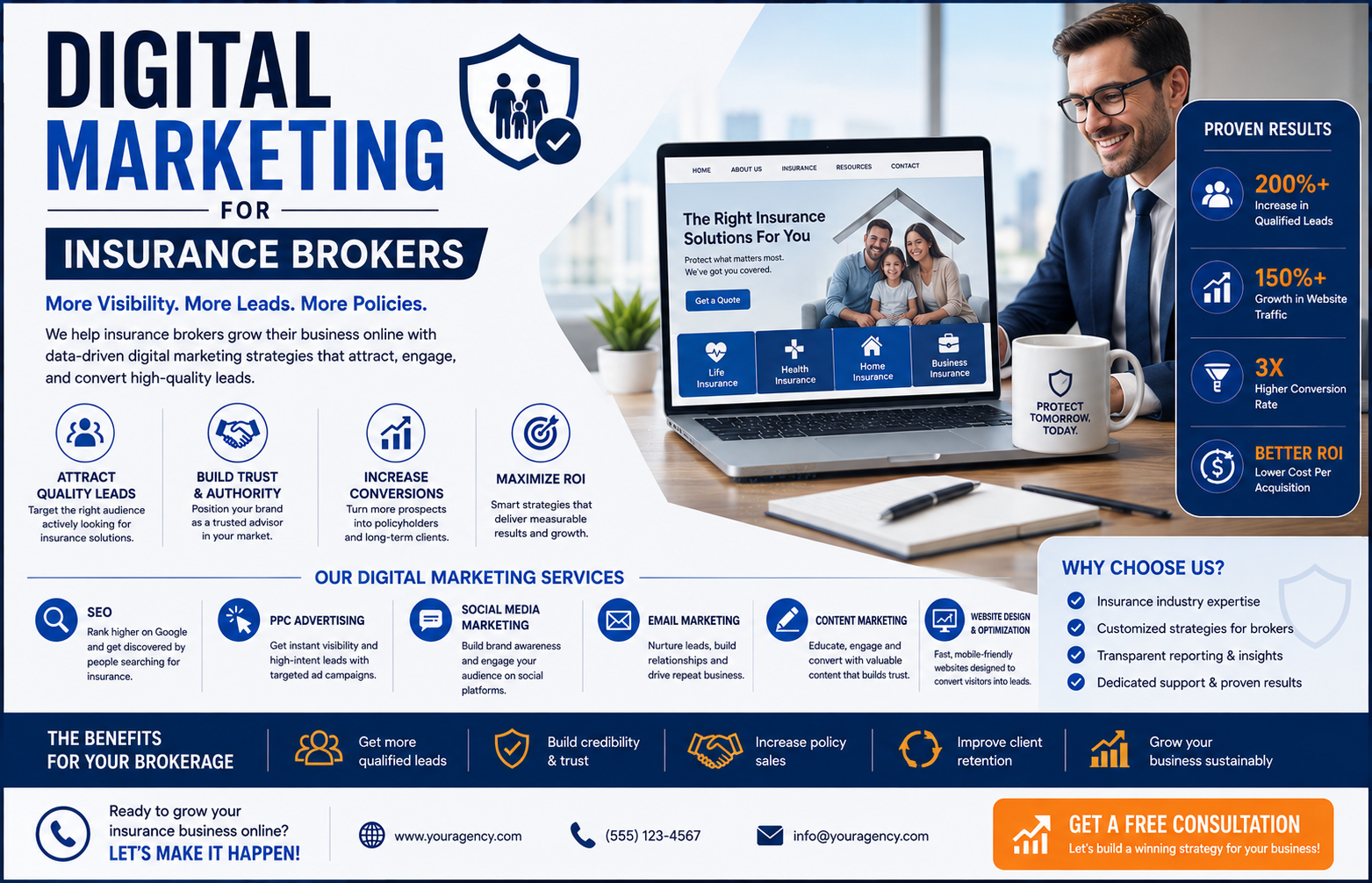
Digital marketing for insurance brokers is about access and confidence. Buyers want enough information to feel smart, enough proof to feel safe, and a clear path to speak with someone competent. However, most brokers market in fragments—one channel here, one vendor there, one random campaign per quarter—and then wonder why growth feels uneven and expensive. Partnering with a digital marketing agency insurance specialist can help unify these efforts into a results-driven strategy. If your current setup looks like a generic homepage, an outdated team bio page, and a contact form that disappears into a black hole, you don’t have a marketing system—you have an online business card.
Why Most Broker Marketing Fails
The core issue with digital marketing for insurance brokers isn’t that brokers don’t market. It’s that most of them market without a clear strategy . Generic campaigns burn money because the broker never decided who the marketing is for. A personal lines retail broker, a high-risk commercial wholesale operation, and a niche E&O specialist have different customer journeys, content needs, and competitive environments .
Two bad assumptions kill broker marketing:
-
“Digital isn’t important because people still want to talk to an advisor.” They do. But they usually decide who deserves that conversation before they ever reach out .
-
“A website alone solves the problem.” It doesn’t. If buyers research online and then stall before purchasing, your job is to build a smooth handoff from search to conversation to quote to policy .
Common Digital Marketing Mistakes for Insurance Brokers
1. Your Digital Foundations Are Broken
Before you spend a dime, your website, Google Business Profile, and social profiles need to reflect who you are and convey trust and credibility . Yet many brokers operate with:
-
A homepage that doesn’t clearly say who you help and with what
-
No visible next step—just a generic “Contact Us”
-
Missing proof elements like licenses, carrier relationships, testimonials
-
No mobile optimisation—over 50% of insurance-related searches happen on mobile, and 78% of those searchers call a business after searching
The fix: Your website should route people cleanly. A specific headline, a visible CTA, and real trust signals make the difference.
2. You’re Talking to Everyone (So No One Listens)
Generic positioning is a slow bleed. If your homepage says you serve “individuals and businesses of all sizes with customized solutions,” you haven’t positioned anything—you’ve hidden .
The fix: Decide what lane you own. Define the buyer. Name the risk. Clarify the value. Then spend money .
3. Overpromising in Your Marketing
Today’s insurance marketplace is competitive, and nearly all brokers market themselves through emails, websites, and social media. But you might overlook that everything published is “on the record.” Plaintiff’s attorneys, regulators, and disgruntled clients can copy and paste your marketing claims into complaints or lawsuits .
Common risky claims:
-
“We’ll always get you the lowest premium”
-
“We’ll ensure you’re covered for all risks”
-
“Full protection, no matter what”
These statements can be used against you to argue that you guaranteed coverage .
The fix: Highlight verifiable strengths instead: “We work with multiple carriers,” “We can shop around for multiple options,” “We provide personalised service.” Never publish anything you wouldn’t want a jury to see .
4. You Don’t Own Your Lead Generation Engine
Many agents outsource lead generation without owning the infrastructure—the marketer owns the ad account, the Facebook page, and the audiences. If the relationship ends, you lose everything: data, performance history, targeting learnings, momentum .
The fix: Your Business Manager, Ad Account, and Facebook Page should be owned by you. The marketer should be added as a partner or admin, not the owner .
5. Neglecting Reviews and Reputation
Reviews are your modern referral layer. Most brokers say referrals matter, but they don’t build a review process that turns good service into visible proof . Meanwhile, RIBO’s guidance confirms that brokers’ online activities are subject to the same professional standards as their offline conduct—fake or purchased reviews, review gating, or AI-generated testimonials presented as genuine are prohibited .
The fix: Ask for reviews at the right moments—after smooth onboarding, after a claim assist, after a renewal save. Keep the ask short and include a direct link . Ensure reviews are genuine and compliant with regulatory standards.
6. Ignoring Local SEO and Google Business Profile
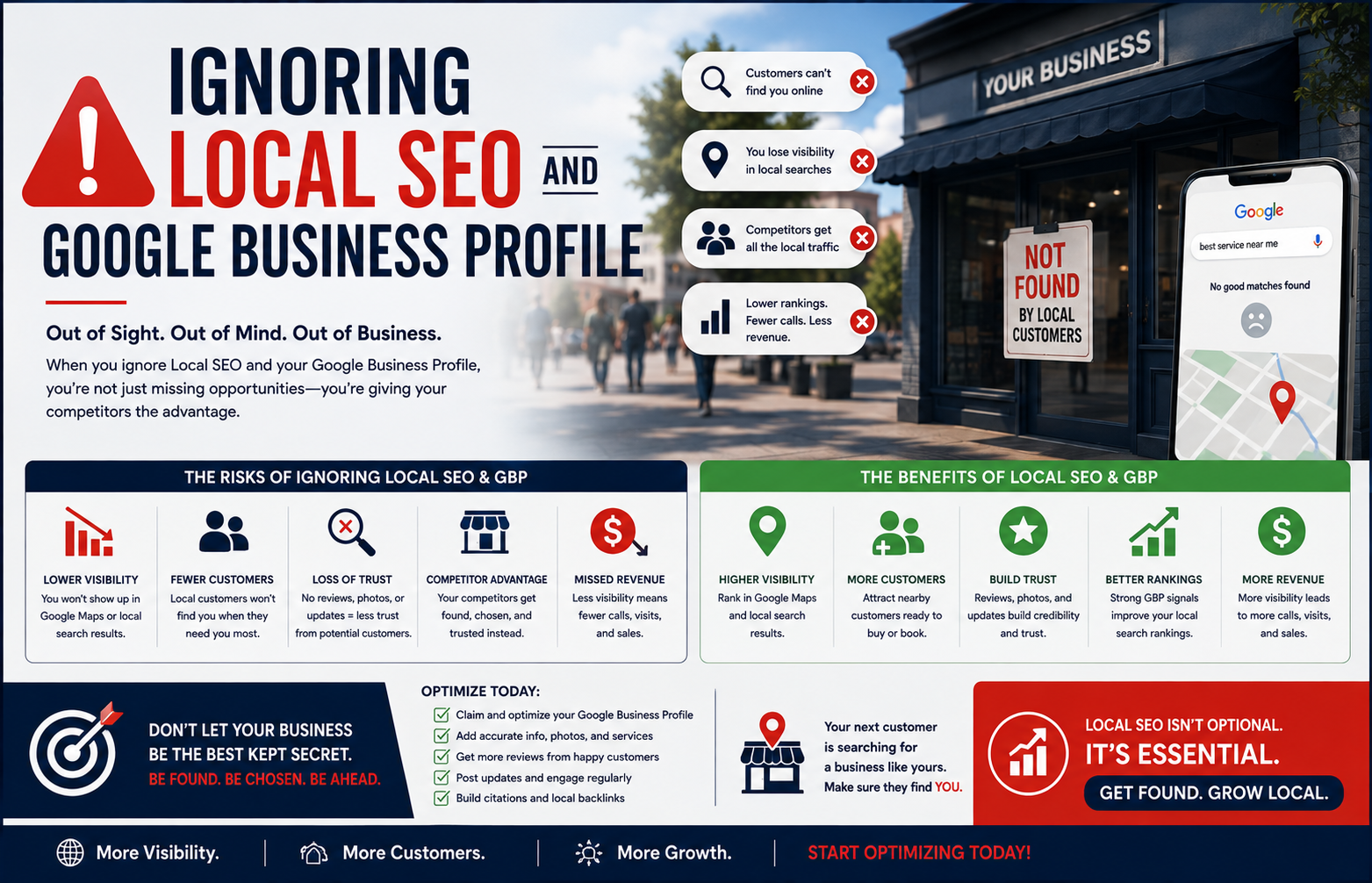
For local and regional brokers, GBP is one of the easiest wins on the board. Most firms underuse it—they claim the listing, add a phone number, and stop there . Without location-specific keywords or geo-based searches like “near me,” you miss people actively searching for insurance in your area .
The fix: Complete your GBP profile: choose the right primary category, write a sharp business description, list services clearly, add real photos, publish updates, and monitor questions and reviews .
Conclusion
The brokers who win in 2026 won’t be the loudest. They’ll be the easiest to find, the easiest to understand, and the easiest to contact when a buyer is ready. Digital marketing for insurance brokers works when you build real digital foundations, define your audience, avoid overpromising, own your assets, manage reviews properly, and optimise for local search. Partnering with an experienced insurance SEO company can further strengthen your online visibility and help attract high-intent prospects.
Want digital marketing for insurance brokers that actually drives qualified leads—without wasting budget on generic campaigns that don’t convert?
Get in touch with Orbitix today.